

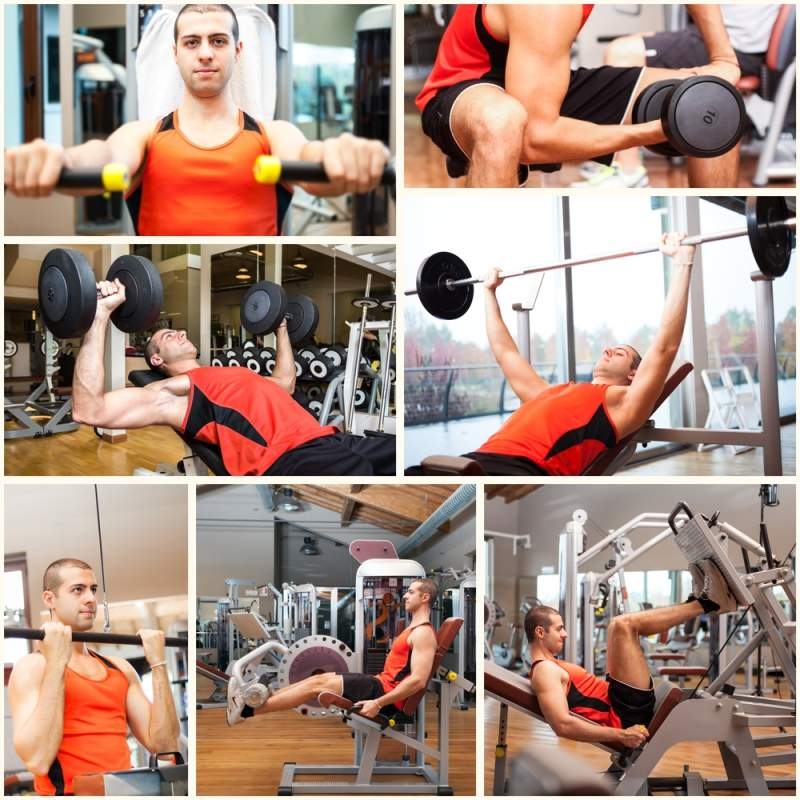
A push-pull-legs workout is a way of structuring your strength training based on what your muscles do. You do push workouts for muscles that perform presses, pull workouts for back and biceps, and leg workouts for your legs.
This blog post is a straightforward approach that makes programming, recovery, and building strength far easier than when you train every muscle every single day.
A push-pull-legs workout is a system of training in three sessions. The push day workout is centered around pushing movements, primarily chest, shoulders, and triceps. The pull day workout is centered around pulling movements, primarily back and biceps. The leg day workout is centered around working the quadriceps, glutes, hamstrings, and calves.
The biggest benefit of this push-pull-legs split is structure. You no longer have to make random selections of exercises each session to get the muscle groups and movement patterns you want to train.
Knowing how to do a push-pull-legs workout begins by selecting exercises that target each of the primary movement patterns. Your workout sessions could consist of compound lifts to build overall strength and then isolation exercises to give certain muscles extra work.
If you're planning a push-pull-legs routine, don't forget to account for your experience and recovery. Beginners might require fewer exercises and time off, and more experienced lifters should be able to support more volume in their workout. Technique should always trump adding weight!
A push day workout revolves around working your chest, shoulders, and triceps with pressing motions. Begin your workout with a big compound lift for maximum energy, then move onto isolations for the muscles. Let's see what exercises are in a push-pull-legs workout:
Useful push-pull-legs exercises include:
Don't do everything in one go. Pick the numbers that work and leave plenty of juice for quality reps.
A pull day workout targets the back and biceps. Pull-ups, rows, and pulldown variations target the upper and middle back, whereas curls are a straight biceps workout.
A balanced pull workout might consist of one vertical pulling exercise, one horizontal pulling exercise, and anywhere from 1 to 2 smaller exercises. This will ensure your back receives various kinds of resistance without extending the workout.
A reasonable leg day workout will hit the entire major muscle groups of the lower body, not just the quadriceps. Exercises such as squats and leg presses can be more targeted towards the front of the leg, while Romanian deadlifts and leg curls can target the hamstrings.
Calf raises and slow, single-leg movements can be good supplementary exercises. Your objective should be to structure an equalizer of a workout, one that builds muscles, power, and stability without overtraining.
Push-pull-legs workouts 3 vs 6 days are more about time availability and how well you can recover from the workout. A 3-day push, pull, legs workout means you perform one push, pull, and leg workout per week. It is more handy and manageable for most people.
A 6-day push-pull-legs workout means doing the same push-pull-legs order twice in the week. This means more training sessions for every muscle group, but also more time needed for sleep, recovery, and better management of training volume. More sessions are not necessarily better.
Three days may be sufficient for someone interested in a manageable strength programme, while six days per week might be preferable for a more experienced lifter.
Your push-pull-legs workout plan also needs to be realistic. A six-day-per-week workout program might be too much, and you will give up entirely and never end up following a six-day workout week program at all.
Yes, a push-pull-legs programme is effective for muscle building because it helps you split your training volume between multiple muscle groups. Repeating the push-pull-legs workout can also help you keep better track of how much you lift over time.
That said, the split alone won't cause muscle growth. You also need progressive overload, adequate protein and calorie intake, sleep, and good exercise form, as well as sufficient rest. A balanced push-pull-legs workout plan should be sustainable—not just demanding.
The foundations of any PPL workout: Start with your primary goal and training frequency (how many days you will train). Choose 2-3 compound movements, include some accessory work, and don't throw in extra exercises just for the sake of getting a longer workout.
Monitor your weights, repetitions, and performance. Keep challenging yourself, and if you can maintain proper exercise form while making slow but steady progress, your push-pull-legs workout programme can stay effective. Even your rest days need to be factored into the plan.
Push-pull-legs workouts can be a simple structure to follow for your strength training routine without complicating every workout in the gym.
Regardless of a 3-day push-pull-legs workout or a 6-day push-pull-legs workout, the best programme is the one you can do with consistency and proper recovery. Incorporate good push-pull-legs exercises with quality form and progressively overload.
A push-pull-legs workout will generally feature pressing movements for the chest, shoulders, and triceps; pulling movements for the back and biceps; and compound and isolation movements for the legs. The specific exercises can vary depending on your goals.
The optimal push-pull-legs workout plan is one that suits your experience level, scheduling, recovery ability, and goals. It would involve the big compound movements, efficient isolation movements, a reasonable amount of volume, and a way to progress the weight or reps.
Are push-pull legs good for beginners? Absolutely, beginners can do push-pull legs. It's okay if there are too many exercises; aim to try three sessions per week to reduce overwhelm and maintain a routine.
You don't need to train to failure every session of your PPL routine. Deciding to leave a few reps "in the bank" and still controlling the reps you can do provides a good balance of training stimulus and fatigue control, especially on difficult compounds.
Is it possible to fit in a push-pull-legs workout with work/family life and recovery? Yes! Incorporate fewer days in a week, add in rest days between training, and run the programme more than once a week.
This content was created by AI